

 Date: Oct.17.2026
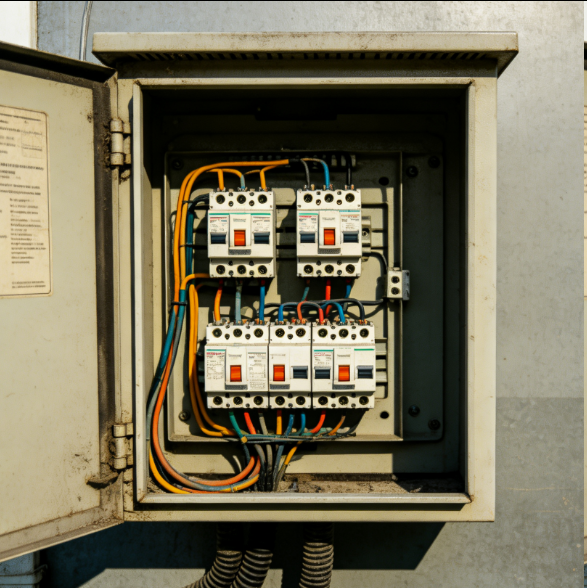
Distribution box wiring is high risk low voltage electrical work, and operators must cut off upstream main power supply completely before commencing any wire connecting steps. Voltage testing instruments must confirm no live voltage exists inside the operation area. Wiring work follows fixed logical sequences: process incoming main supply wiring first, then complete busbar installation, afterward connect every outgoing branch circuit conductor, and finish earthing system termination as essential final steps. Pre processing for cables represents an easily overlooked preparation link. When stripping cable outer sheaths and conductor insulation layers, avoid nicking internal copper wire core structures. Damaged copper conductors will suffer accelerated oxidation and local over heating after long time operation. Wire end exposed copper length should exactly match terminal block depth. Too long exposed copper risks adjacent terminal short circuit; too short exposed sections result in insufficient clamping area and loose connection failure. For multi strand flexible copper wires, crimp on wire lugs are recommended for terminal connections to prevent scattered fine copper wire strands from creating accidental short circuit faults inside box interiors.
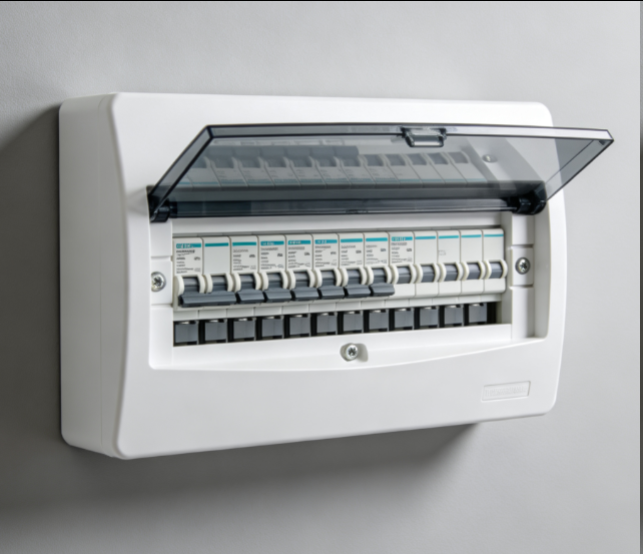
Main incoming power wiring connects utility supplied power toward main breaker input terminals. In single phase household distribution box systems, live phase conductors connect to main breaker phase input points. Neutral wire conductors route toward neutral busbar terminals instead of directly passing through single pole main switches. Two pole main breakers can simultaneously disconnect both phase and neutral lines, bringing higher level safety during equipment overhaul work. After the main breaker output side, phase current flows to the horizontal copper busbar which supplies power for all branch miniature circuit breakers. Every branch breaker clips onto this live busbar, acquiring input electric energy. Neutral conductors of all downstream circuits uniformly terminate onto independent neutral busbar. Neutral busbar must maintain electrical isolation from metal box shells. All green yellow protective earth wires, including incoming system earthing conductors and each branch circuit earthing wire, gather on dedicated PE earthing busbar. The PE busbar establishes reliable electrical connection with metal distribution box casing, ensuring shell surfaces connect to building protective earthing networks. Never mix neutral wire terminals and protective earth wire terminals; wrong inter connection will produce serious electric shock hidden dangers.
Branch circuit wiring implements one breaker one loop principles. Each independent load circuit corresponds to one dedicated branch breaker. Phase conductors from branch breaker output terminals lead to downstream electrical equipment loads. Neutral wires from the same branch cable connect onto neutral busbar free terminals, and protective earth wires fasten to PE busbar positions. Group circuits reasonably according to practical use scenarios: separate lighting loops, ordinary socket loops, kitchen dedicated loops, bathroom dedicated loops and high power appliance independent circuits. Bathrooms and outdoor related branch circuits should match residual current protection devices. After completing all wire termination steps, tidy internal wiring routes. Avoid chaotic overlapping cable wires which hinder heat dissipation and later time maintenance operations. Clean copper chip debris generated in wire stripping procedures completely out of enclosure interior. Mark every branch circuit breaker with durable labels, clearly indicating which rooms or electrical appliances each loop controls. Before power on, perform comprehensive manual re check of every terminal screw tightening condition. Loose terminals constitute the most frequent origin of distribution box over heating and electrical fire accidents. Use multimeter tools to detect insulation resistance between phase to neutral, phase to earth positions, eliminating hidden short circuit points. Restore power supply only after all electrical parameter testing achieves qualified results. After power on, test manual trip functions for every breaker and residual current protection device. Observe box internal terminals for abnormal heating phenomena. Qualified distribution box wiring keeps neat internal layout, strictly distinguishes phase, neutral and earth conductors, realizes independent loop protection, and reserves clear maintenance identification information for future period overhaul work.

 Prev


 Oct.17.2026