

 Date: Oct.29.2026
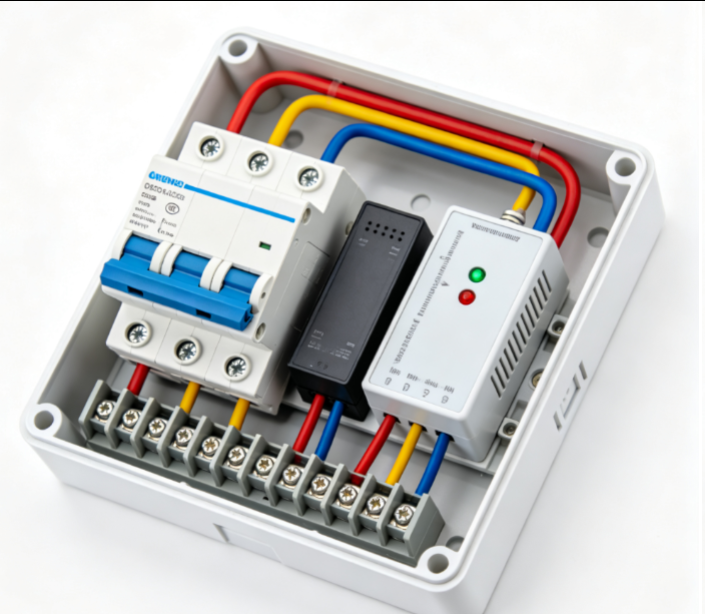
Smart home distribution box represents the upgraded power distribution centre for modern residential housing, integrating traditional circuit protection functions together with intelligent sensing, status feedback and partial remote control features to match multi device electricity consuming demands of smart home living scenarios. Replacing conventional household fuse boxes or basic distribution panels, this enclosure organises power branches for household lighting, wall sockets, kitchen circuits, air conditioning units, water heaters and other large power home appliances. Beyond basic overload and short circuit protection, smart home distribution boxes collect real time electrical data for each separate household branch. Home users can obtain energy consumption statistics, circuit status information and fault alert reminders via human machine interaction terminals or mobile device applications. It forms the physical power management foundation for whole house smart living setups.
Functional differentiation between smart home distribution boxes and ordinary domestic distribution boxes mainly reflects in granular branch level intelligence. Each outgoing home circuit is equipped with corresponding sensing components. The system records real time current, voltage and power consumption for lighting loops, socket circuits and high power appliance branches separately. Household residents can check power usage trends for individual home zones, identify abnormally high consumption equipment and form better energy saving habits. Certain product versions support remote on off control for selected non critical branches. For example, users can remotely cut off socket loop power when going out, to reduce standby power waste and lower potential fire risks caused by peripheral electrical equipment. It should be emphasised that safety critical tripping events triggered by short circuit or leakage faults are implemented by hardware protective components, and remote software cannot block these mandatory safety actions.
Enclosure dimension planning and household scenario oriented design details affect actual user experience of smart home distribution boxes. Compared with regular home distribution panels, smart home type units reserve extra internal installation space for sensing modules and communication hardware, so overall cabinet volume is generally larger. During residential renovation phases, installers need to reserve suitable wall embedded box dimensions in advance. Common communication options include wired network connection or wireless linkage modes, matching different home network layouts. Suitable heat dissipation space must be maintained inside the cabinet, avoiding dense cable stacking that raises internal temperature. Protection specifications still follow domestic residential electrical standards: residual current protection is configured for socket loops and bathroom related circuits. While smart functions improve household electricity management convenience, end users cannot rely entirely on intelligent alerts. Occasional manual inspection of cabinet temperature, switch status and wiring terminal conditions remains necessary, to guarantee long term safe power consumption for the whole residence.

 Prev


 Nov.12.2026